The Role of Hard Cash Loans in Real Estate Purchases: What You Required to Know
Hard cash finances are a pivotal funding device in property purchases. They provide financiers fast accessibility to capital, especially in urgent circumstances. Protected by genuine property, these loans concentrate on property value instead of the customer's credit scores history. Nevertheless, they feature noteworthy risks and prices. Recognizing the nuances of tough cash car loans is essential for anybody seeking to browse this complex monetary landscape properly. What aspects should investors consider before continuing?
What Are Hard Money Loans?
Hard money loans act as an essential funding choice in property transactions, specifically for investors looking for fast access to capital. Unlike standard lendings, hard money financings are secured by real estate and are primarily based upon the value of the asset as opposed to the consumer's credit reliability. These loans are normally supplied by exclusive lenders or investors, enabling debtors to bypass lengthy approval processes associated with standard funding.
Difficult money loans are often short-term solutions, with repayment durations ranging from a couple of months to a few years. Due to their expedited nature, they are preferred among real estate flippers and those requiring instant funds for residential property acquisition or recovery. Rate of interest for hard cash financings often tend to be greater than standard finances, mirroring the enhanced danger loan providers undertake. In general, tough cash fundings meet a crucial duty in the property market, accommodating those who need adaptability and speed in their funding options.
Advantages of Hard Cash Loans
While traditional funding can be slow and difficult, difficult cash finances offer a number of distinct advantages that interest investor. One essential advantage is the rate of the financing procedure; fundings can usually be approved and moneyed within days, enabling financiers to seize possibilities rapidly. This fast turn-around is specifically helpful in open markets where time is important.
Furthermore, difficult cash car loans are mainly asset-based instead of credit-based, meaning that capitalists with less-than-perfect credit history can still protect financing. This accessibility allows a wider series of investors to take part in realty transactions.
Difficult money lending institutions generally have extra versatile terms and conditions contrasted to traditional loan providers, allowing for customized settlement plans customized to private task requirements. This flexibility can enhance a financier's capability to take care of capital successfully throughout remodelling or resale phases. On the whole, these advantages make hard cash finances a compelling option for several property endeavors.
Possible Disadvantages to Think About
While difficult money lendings can give fast funding, prospective disadvantages necessitate mindful factor to consider. Borrowers often face higher rates of interest compared to conventional financing, which can increase overall prices. Additionally, the much shorter payment terms may press borrowers to secure refinancing or sell the residential or commercial property earlier than anticipated.
Greater Rates Of Interest
Greater rate of interest prices represent a considerable consideration in hard money fundings, specifically in realty deals. These financings generally include prices that are substantially more than typical financing options, commonly ranging from 8% to 15%. This raised price can impact the general earnings of a property investment, as consumers might find themselves allocating a larger part of their spending plan to passion settlements. Furthermore, the high rates can produce challenges for financiers looking for to utilize their funding efficiently. For those that are not prepared for these economic implications, the concern of high-interest payments can lead to capital issues, eventually affecting the success of the residential property financial investment. Comprehending the ramifications of greater interest rates is important for prospective consumers.
Much Shorter Repayment Terms
Much shorter payment terms are a defining feature of difficult money finances, which can provide numerous obstacles for debtors. Usually ranging from six months to 3 years, these terms require debtors to settle the car loan rapidly, commonly resulting in monetary strain. The stress to produce returns within a minimal timeframe can push borrowers to rush building restorations or sales, possibly endangering the high quality of the investment. Additionally, the need of a swift departure technique might limit alternatives for refinancing or selling, leading to higher risks. Borrowers must meticulously consider their economic capacities and market problems to stay clear of back-pedaling these car loans, which can lead to the loss of the collateralized property.
Just How Difficult Money Lendings Function
Tough cash fundings operate via an one-of-a-kind structure that prioritizes asset worth over creditworthiness. The approval process is usually quick, enabling borrowers to gain access to funds promptly compared to typical financing. Additionally, an examination of rates of interest discloses that difficult money lendings commonly carry higher prices, reflecting the boosted risk taken by lending institutions.
Loan Framework Discussed

In property purchases, understanding the structure of hard cash loans is essential for investors looking for quick funding. Tough money fundings are normally secured by property, with the residential or commercial property working as security. These car loans normally involve greater rates of interest compared to typical funding, showing the raised danger taken by loan providers. The financing terms are normally short, frequently varying from 6 months to three years, helping with rapid access to resources. Finance amounts can vary significantly, frequently relying on the residential or commercial property's worth as opposed to the debtor's credit reliability. Investors benefit from the expedited authorization procedure, enabling them to confiscate financial investment possibilities quickly. Overall, the structure of tough money financings satisfies those requiring quickly, adaptable financing choices in real estate markets.
Authorization Process Summary
The authorization process for difficult money finances stands out from conventional financing approaches, mainly concentrating on the collateral instead than the debtor's credit rating account. Lenders assess the worth of the property being used as security, guaranteeing it meets their standards for risk assessment. Once a residential or commercial property is identified, customers send a funding application that includes details concerning the home and the planned usage of funds (Georgia hard money lenders). The loan provider conducts a quick assessment and may call for extra paperwork, yet the process is normally sped up contrasted to traditional financings. Authorization frequently takes place within days, permitting debtors to gain access to funds swiftly. This structured technique is valuable genuine estate capitalists looking for fast financing solutions for purchase or restoration jobs
Rates Of Interest Comparison
While hard money car loans provide quick accessibility to funds, their rates of interest are commonly greater than those of traditional home loans. Consumers can expect prices varying from 8% to 15%, relying on the lending institution and the specifics of the deal. On the other hand, standard home loan rates generally fall in between 3% and 6%. The higher prices related to tough cash finances reflect the increased danger loan providers take, as these fundings are typically protected by the home itself instead than the borrower's creditworthiness. This implies that while hard money loans can assist in quick funding for real estate financial investments, they can additionally bring about significantly higher costs over time, making it vital for consumers to carefully evaluate their financial circumstance prior to proceeding.
When to Utilize Tough Cash Fundings
When is it prudent to contemplate difficult cash financings in property purchases? Financiers commonly consider these lendings in situations where typical financing is either not available or unwise. For example, difficult cash lendings can be advantageous for residential or commercial properties calling for fast purchase, such as foreclosure auctions or distressed homes requiring immediate renovations.
Furthermore, investor seeking to maximize time-sensitive chances, like flipping homes, may locate difficult money fundings beneficial as a result of their expedited authorization procedure. Customers with less-than-perfect credit history or unique residential properties may also opt for hard money funding, as lenders mostly focus on the home's value rather than the consumer's financial background.
Tips for Picking a Tough Cash Loan Provider
Just how can investors ensure they select the ideal tough money lender for their realty requirements? Detailed research is essential. Financiers need to evaluate prospective lending institutions by assessing their experience, client, and reputation testimonials. It is a good idea to seek lenders who specialize in the kind of residential property being funded, as this can boost the possibility of positive terms.
Next, recognizing the lending institution's terms and conditions is substantial. Financiers must ask about rate of interest, fees, and settlement routines. Transparent interaction is crucial; lending institutions must want to clear up any kind of uncertainties.
In addition, assessing the lender's financing rate and adaptability can be advantageous, especially in competitive markets. Capitalists should likewise take into consideration developing a rapport with the lender, as a great relationship can promote smoother transactions. Ultimately, seeking advice from sector professionals or realty agents can supply additional insights and suggestions, making certain an educated decision.
Frequently Asked Concerns
Can Hard Cash Loans Be Made Use Of for Industrial Residences?
Tough cash lendings can indeed be used for industrial homes, providing quick financing alternatives for capitalists - Georgia hard money lenders. These car loans are generally protected by the home itself, allowing borrowers to access funds without conventional loaning demands
What Is the Typical Loan-To-Value Proportion for Hard Cash Loans?
The normal loan-to-value ratio for hard money finances normally ranges from 60% to 75%. This proportion differs based upon the home kind, loan provider policies, and individual consumer situations, showing the greater threat connected with these lendings.
Are Tough Cash Car Loans Offered to First-Time Property Buyers?
Difficult money loans can be accessible to new homebuyers, though terms differ by lender. These financings typically have greater rate of interest and shorter repayment durations, making them a less standard choice for brand-new purchasers.
Just How Promptly Can I Close on a Difficult Money Finance?
The rate of shutting on a hard cash funding can vary, yet commonly it varies from a few days to a number of weeks, depending upon the lender's requirements and the customer's economic circumstance. (Georgia hard money lenders)
What Papers Are Required to Use for a Hard Cash Lending?
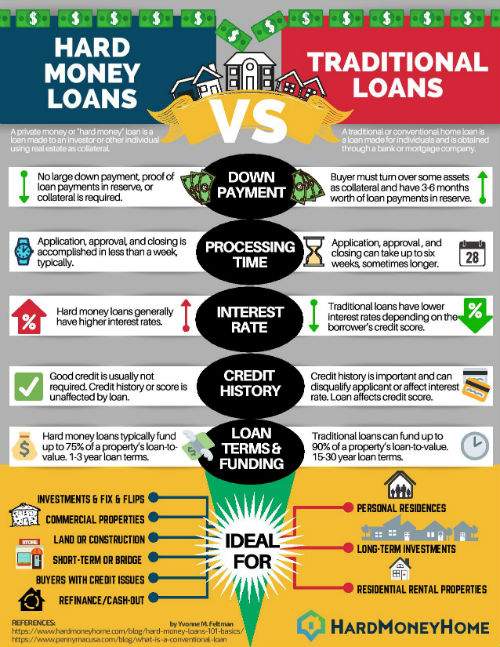
Unlike conventional car loans, tough cash financings are safeguarded by real property and are mainly based on the value of the asset rather than the borrower's creditworthiness. Passion rates for difficult cash finances often tend to be greater than conventional lendings, mirroring the raised threat lending institutions embark on. The approval process for difficult cash financings is distinctive from typical borrowing approaches, largely concentrating on the collateral rather than the customer's credit history account. The higher rates connected with difficult money car loans reflect the raised threat loan providers take, as these loans are frequently secured by the residential or commercial property itself rather than the borrower's creditworthiness. To apply for a hard cash car loan, borrowers commonly require to offer building details, a car loan application, evidence of income, credit scores background, and identification.